Contact Us

Account Secured Login

Investment Principles

Fundamental Approach

In-house research drives all of our investment decisions

Every investment decision we make is guided by one clear belief: great investments start with great businesses. That is why our strategy is powered by deep, in-house research carried out by investors who think like business owners.

Our team uses a fundamentally driven, hands-on approach. We combine broad macroeconomic insights with detailed, direct analysis of industries and individual companies. We engage directly with management teams, customers, and suppliers to understand the critical factors driving performance and potential. To further enhance the quality of our research, our diverse team also conducts on-site visits to production facilities, distribution centers, and other key operational locations, gaining firsthand insights that are difficult to replicate from afar.

As part of this process, we review strategies, examine business plans, and analyze both current dynamics and future challenges and opportunities. The aim is to create a comprehensive, forward-looking picture of each company and its broader environment. We prepare detailed multi-year financial forecasts and draft investment proposals for every candidate under consideration.

These proposals go through a rigorous peer review process which guides investment decisions made by senior portfolio managers, under the governance of the Investment Council. Regardless of experience or seniority, all portfolio managers are expected to clearly articulate the rationale behind their recommendations. This fosters a culture of transparency, encourages knowledge sharing, and supports continuous mentoring. It also ensures that every decision remains grounded in our core investment principles.

Ongoing monitoring and validation are essential to our approach. We continuously refine our outlooks as market, industry, and company-specific conditions evolve.

Our research is as detailed as if we were preparing to run the business ourselves because in our view, that is what true ownership and true investing really mean.
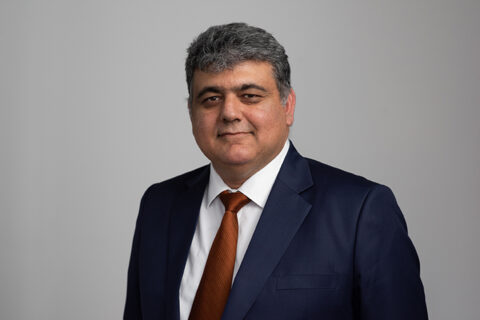
Rohit Khuller, CFA, MBA

Vice President – Investment ManagementPartner

ESG Integration

ESG factors are seamlessly integrated into our investment process and portfolio decisions

We believe that sound business practices, including strong corporate governance and responsible management of material environmental and social issues, help companies achieve greater success and financial performance over time. Conversely, companies that have poor ESG practices present risks that hinder their performance.

Each analyst is responsible for investigating the environmental, social and governance risks – and the opportunities – companies in their coverage face. Most of the investment team has obtained the Fundamentals of Sustainability Accounting (FSA) credential from the Sustainability Accounting Standards Board (SASB), an industry leading accreditation for ESG investing. In addition, a portfolio manager has been designated as ESG Lead and is responsible for conducting an independent verification of each investment. The Lead presents third-party ESG research to the investment committee as each investment is made and follows up with an annual review of all companies in our portfolio.

We are a member and active voice of the Canadian Coalition for Good Governance (CCGG) and are a signatory of the United Nations’ Principles for Responsible Investment (UNPRI https://www.unpri.org), a global framework for incorporating ESG issues into investment practice. We actively engage with our investee companies in our quest for sustainability, promoting effective corporate governance and business practices.

Through ongoing, active engagement, we hope to contribute toward positive change. We believe we can do good while doing well.
Edward Dashwood, CFA, MBA

Portfolio ManagerPartner

Price Sensitivity

Distinguishing the difference between a great company and a great investment depends on understanding the difference between price and value

Price has meaning when compared to the underlying economic value of a company’s activities. Once the value of the company has been assessed by our investment research team, we then look at the price we need to pay for the company in the market. We are interested in the relationship between value and price and our objective is to invest at a justifiable price.

We do not react solely to share price changes, rather, we react to changes in the price-to-value ratio. Thus, the evolution of a company’s prospects and its intrinsic value also play an essential role. The economic value of an investment is determined by building forward-looking, multi-year financial models of revenues, costs, cash-flows, profits and dividends.

We tend to avoid securities with a lot of valuation risk, or those that are too dependent on achieving extraordinary future growth. Our portfolios typically have lower price/earnings ratios than the overall market. They also have higher current yields, trade at lower price-to-cash-flow and have higher margins based on true market value.

We are trying to invest in the best opportunities, at the best prices. That is the core of what we do.
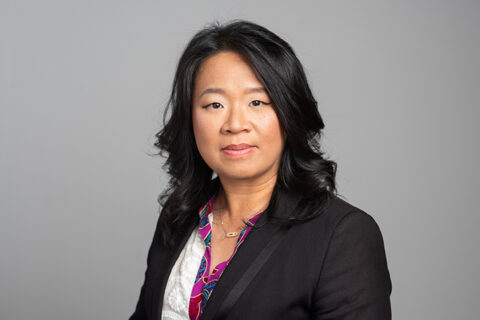
Charmaine Lim Uy, CFA, MBA

Senior Portfolio ManagerPartner

Longer Investment Horizon

In investing, patience is not passive. It is strategic

We believe that long-term thinking is essential to sustained investment success. Short-term market fluctuations often obscure the true drivers of value—namely, a company’s ability to execute its strategy, invest in growth, and adapt to changing market conditions over time.

Growth requires a clear vision, disciplined capital allocation, strong leadership, and time. We position our portfolios with a 3 to 5 year horizon to capture these fundamental changes, which rarely materialize overnight.

A longer-term view offers several key advantages:

  • It helps us look beyond market volatility and focus on the real economic drivers shaping a company’s future.
  • It provides the necessary time for business plans to be executed, refined, and proven.
  • It enables us to better navigate economic and market cycles, rather than being reactive to short-term fluctuations.
  • It allows us to anticipate how industries evolve, by studying long-term secular trends and understanding cyclical dynamics.
  • It strengthens our ability to position investments in alignment with structural changes, rather than transient market movements.

This disciplined approach helps us avoid reactionary decisions driven by short-term noise and keeps us focused on realizing value from the growth drivers identified in our research, as our investment theses play out.

Ultimately, a multi-year perspective aligns with how businesses grow and transform. It enhances our ability to identify opportunity, manage risk, and generate strong, sustainable returns.
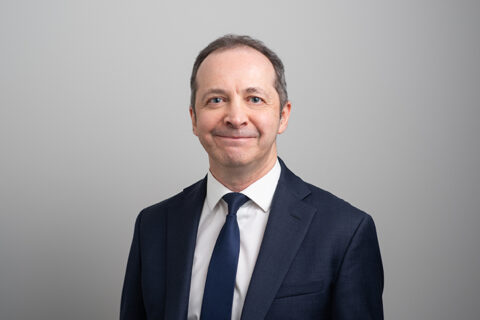
Joël Kaczor, CFA

Chief EconomistSenior Portfolio ManagerPartner

International Perspective

We research with a global perspective, reflecting today’s cross-border markets

We believe that organizing our research team along global sector lines is the most effective way to identify compelling investment opportunities and build well-diversified portfolios. In today’s interconnected world, financial markets move together. Economies are bound by trade, interest rates, capital flows, and by the actions of multinational companies and investors. A regionally limited investment strategy risks missing the full picture and falling behind.

Our team has developed deep expertise across global sectors. We track industry-defining trends and engage directly with corporate leaders to understand the strategies and challenges shaping businesses around the world.

Each analyst specializes by industry and geography to ensure focused, in-depth coverage. As a team, they speak thirteen languages and regularly travel to meet management teams, visit facilities, and evaluate companies on the ground, wherever opportunities arise.

To capture opportunity and manage risk, we follow sectors wherever they lead, because if markets are interconnected, our research must be global.
Mila Krassiouk, CFA, MBA

Senior Portfolio ManagerPartner

Public-Markets Universe

The characteristics of public markets – diversification, liquidity, transparency, low costs, and strong governance – reduce risk

When you buy shares listed on an exchange, the issuing company has met the financial requirements and is bound to report audited earnings on a regular basis according to strict standards. This may not necessarily guarantee good governance, but it does make it a public and visible issue. You know what you are investing in, and what it costs at any given time. You have flexibility to buy or sell your investment.

Private markets, by contrast, are mostly opaque. Private equity investments are sometimes shrouded by unknown risks, long capital lock-in periods and infrequent (and subjective) pricing. Choice is limited and opportunities are not always available for purchase. Problems cannot always be disposed of.

Transparency, known regulatory environments, and liquidity are key requirements. Therefore, we only invest in publicly-traded securities.

We trade only in public markets because they provide liquidity and transparency.
Stéphane Lebrun, CFA

Vice President – Investment ManagementPartner

Private Clients & Family Offices

Partner with an investment counsellor who understands your need to protect and grow wealth over time.

Institutional Investors

Work with an experienced team using a research-based, fundamental investment approach with a focus on valuation.

Meet the Team

Who is LetkoBrosseau?